Skip to content
From clutter to control: the 5S way to better waste management
Most people don’t ever think about the rubbish bins at work. And that’s exactly as it should be. Yet the humble bin delivers a service we all rely on every single day.
From the shrink wrap peeled off the pallet deliveries in the warehouse to the chocolate bar wrapper from your mid-morning coffee break, everyone contributes to workplace waste. And if it isn’t being managed properly, everyone notices—fast. Smells, hygiene issues, cluttered spaces and workflows that suddenly feel harder than they need to be.
Waste management may not be glamorous, but when it’s done right it supports safety, productivity and shared spaces we can all feel proud of. Without having to think about it.
The serious business of waste
Of course, behind the scenes someone is thinking about it. If you manage the waste in your business—whether you’re a savvy site manager or compliance officer, in the ops team or facilities—you understand just how critical the job is, not only for keeping things running smoothly but for meeting legal obligations and supporting sustainability goals. And that job is getting harder.
As awareness of our environmental impact increases, the circular economy continues to grow and waste legislation evolves with it. Businesses are being asked to throw away less, recycle more, separate their waste streams, and prove they’re doing it all correctly. Keeping pace with the rules is increasingly complex, particularly across busy, multi-use sites. And getting it wrong risks financial penalties, prosecution and reputational damage that lingers far longer than yesterday’s leftovers.
Out of the shadows

Gone are the days when waste collection was something to hide away. Today’s responsible organisations are bringing their waste procedures into the light, investing time and care to create a process that’s clean, efficient and fully compliant. The real challenge? Finding a setup that’s all of those things while also being:
- simple for everyone to understand
- quick and straightforward to adopt
- easy to repeat and maintain, week after week
That process takes structure. It takes discipline. It takes 5S.
What is 5S?
5S is a methodology first developed in Japan’s car manufacturing industry to increase process efficiency by removing waste from the workflow. In this original context, “waste” referred not so much to physical materials but to wasteful activity such as unnecessary movement or overproduction. But it’s fitting that 5S also applies so powerfully to the removal of waste itself.
The term 5S comes from the methodology’s five principles, commonly translated into English as:
Together these principles provide you with a framework you can apply to any process in or outside of work to bring structure and clarity.
How do I apply 5S to managing waste?
5S can help you create a waste management system that’s organised, efficient and easy for everyone to follow, giving you a whole new level of control across your site. Here’s how it works, and how Manutan UK can support you at every step.
-
SORT
Sorting means assessing the tools and equipment involved in your process and removing anything that isn’t needed. In waste management terms, it means identifying which waste streams you produce and ditching unnecessary bins.
Time to review the waste being collected in your organisation. How many bins do you have? Do they all get used? Are you separating waste correctly in line with the government’s Simpler Recycling initiative? This legislation is now in force in England for businesses with 10 or more employees and by March 2027 it will apply to all businesses.
Having the right number of bins in place—no more, no less—will save you space and time, speed up decision-making at the bin area, cut down contamination and streamline your collection schedule.
Compliance check! A food bin must be provided wherever food waste is generated
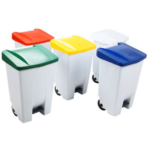
That includes staff break areas even if lunch is brought in from home. The same goes for drink stations, even if you’re only collecting the occasional teabag.
Manutan UK offers a wide range of food waste bins—browse different sizes, materials and designs to find the perfect fit for your space.
-
SET IN ORDER
Setting in order involves organising the items you kept in the sorting stage into logical order, so they’re easy to find, easy to use and hard to get wrong. In waste management, intuitive and ergonomic placement makes a real difference. Put a bin in the wrong place and it will quickly lead to mess and misuse, if it’s used at all.
A well-ordered, clearly labelled system reduces errors, improves recycling rates and saves time because the right choice becomes the easiest one. For example:
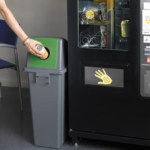
- Put recycling points where waste is created, not where it’s convenient to hide them. Just make sure they don’t block walkways or emergency exits.
- A confidential waste bin belongs near the printer where sensitive documents are most likely to be discarded.
- Place a food bin close to the kettle for fewer teabag drips.
Collection schedules also matter. Do they reflect how much waste you actually produce? Can heavier or high-volume bins be positioned closer to exit points to make collections safer and smoother?
Top tip! Clear, colour coded labelling will speed up decision-making at the bin
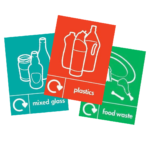
Transform your waste wheelies with these handy recycling signs from Manutan UK.
Better still, upgrade your recycling station with our space-saving waste sorting range, purpose-built to separate streams and help you smash your recycling targets.
-
SHINE
The shine step focuses on inspecting and cleaning work areas and equipment to ensure a safe, fully functioning environment. Keeping waste collection spaces clean is obviously essential, but shining goes beyond basic hygiene. A clean, well-maintained bin station signals that waste management matters.
Neglected bins will discourage people from using them, which directly impacts recycling rates. In industrial environments like warehouses and workshops, where waste is often bulkier and health and safety standards more stringent, a cluttered or overflowing waste area can also lead to safety incidents and operational downtime.
A simple daily inspection and cleaning routine identifies issues like spillages or full bins early, keeping problems small and under control.
Top tip! Using bin sacks is a simple way to make waste handling safer and more hygienic

They act as a protective barrier between waste and the bin, containing leaks and odours, reducing buildup of residue and bacteria, and speeding up both the cleaning and disposal routine.
Manutan supplies sacks and bags for every kind of waste in a wide range of sizes, materials and colours—from pedal bin liners, to multi-colour recycling sacks, to 1500kg canvas rubble bags.
-
STANDARDISE
Standardising is about building consistency into your process so it’s easy to maintain and repeat day after day. In waste management, this involves creating the same setup and routine for all bin stations so they work the same way, everywhere. This might include:
- using consistent bin colours, labels and terminology
- documenting inspection, cleaning and collection procedures
- creating visual guides and routine checklists
- implementing staff training
- aligning practices with sustainability and compliance policies
Clear, consistent systems enable staff and contractors to move between spaces without confusion and new starters to quickly understand how things work. Documented processes are also invaluable during audits and when there’s a change of personnel.
Did you know? There’s no official colour code for bin collection in the UK.
However, these bin and sack colours are commonly used:
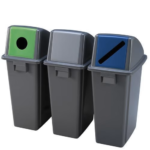
- black or grey: general, non-recyclable waste
- blue: dry recycling (paper, glass, plastic, metal)
- green or brown: food waste or garden waste
With no colours set by law, you’re free to choose which bins collect which waste. Just be sure to apply your system consistently across locations. Manutan UK supplies bins in colours to support your choices, including our popular 60–80 litre waste sorting trio in blue, grey and green.
-
SUSTAIN
The final step in 5S is sustaining the process improvements. Waste management only works if it becomes part of everyday behaviour, not a one-off initiative.
Sustaining your good practice requires ongoing, regular monitoring. The cleanliness of a bin area gives you an instant visual check as to how well the system is working and whether bins need repositioning, clearer signage or more frequent collection.
Clear ownership ensures standards don’t slip and ongoing staff engagement is also key. Keep up the momentum by:
- providing refresher training and onboarding new starters
- including waste management on meeting or away-day agendas
- encouraging feedback and continuous improvement
- sharing progress against sustainability goals
- introducing friendly competition between teams
Doing waste management well—with 5S and Manutan
Effective waste management isn’t just about bins and collections. It’s about creating a system that’s efficient, intuitive and embedded in the culture of your organisation. 5S methodology provides a proven framework for achieving exactly that—helping organisations reduce waste, increase recycling targets and stay aligned with evolving legislation.
As a leading supplier of waste and recycling equipment, Manutan UK supports businesses in all sectors with practical solutions that make managing waste simpler and more efficient. From bin stations and signage to expert guidance, we’re here to help you move from clutter to control the 5S way.
Discover fast, free delivery on our full waste and recycling range.