
Food bin, food waste caddy, kitchen caddy—whatever you call it, wherever you keep yours, that small, drip-splattered container in the corner of your home is the focus of new legislation coming into force this month affecting how food waste is collected across the country.
With changes on the way, here’s everything you need to know about choosing the right food/kitchen* caddy/bin* (*delete as appropriate) plus tips for using it the right way too.
Household food waste collection—what’s changing and when?
From 31 March 2026, new rules under the government’s Simpler Recycling initiative will make it mandatory for every council in England to provide a separate food waste collection service for households, including flats and shared accommodation.
Food waste collection has been gradually rolling out across England for years and if your address was one of those selected for early trials, you may have been using a food bin for more than decade by now. But for millions of homes—up to one in four—a separate food waste collection is still yet to be provided.
The change in legislation aims to end this ‘postcode lottery’ by giving every household access to a dedicated food waste collection service, standardising processes across the country—and bringing England in line with Wales, Scotland and Northern Ireland where most councils already provide the service to residents.
How will the new food waste collection rules affect me?
If you already have a weekly food waste collection, you may notice little difference. But if your home hasn’t had the service before, food waste recycling is about to become part of your everyday life for the first time.
Your local authority will contact you to confirm which day of the week your collection will be made. (It may align with your other waste collection days though that’s not always the case.) You’ll also be provided with an outdoor food waste bin to put your week’s food waste into, ready for kerbside collection on the day.
Some authorities provide a smaller food waste caddy for indoor use too, though many households choose to buy their own caddy for inside their home so they can select something that better fits their space, decor or family size.
Getting regulation-ready
A number of councils have warned they may miss the 31 March deadline due to funding and logistical issues, so your area may not see a full rollout until 2027. However, most are expected to have services in place by the end of the year. You can read more about the delays in this BBC report which includes a useful map tool allowing you to check if your council is on schedule.
Whether your council is on time or a little delayed, one thing is certain: food waste recycling is coming your way. So it’s time to find a suitable food waste bin for your household and kitchen setup.
And if you’re a seasoned food caddy user, spring cleaning season provides the perfect excuse for an upgrade. Let’s be honest, your food waste bin has probably seen better days—and the food caddy market has probably come a long way since you last looked. From compact countertop caddies to sleek, smell-reducing styles, today’s caddies are designed to make collecting kitchen scraps a much cleaner affair.
Choosing the right food waste caddy for your kitchen
- Size—when it comes to choosing a food waste caddy, size matters. Most kitchen food caddies hold between 3 and 7 litres, which is enough for a few days of food scraps for an average household. Larger families or keen cooks might prefer a bigger bin to reduce how often it needs emptying.
- Material—food waste gets messy, so it’s important your caddy is made from a material that’s easy to clean. Smooth surfaces, rounded corners, no fiddly fixings—this all helps prevent food from sticking. Ensure the material is dishwasher-safe too (most plastic and stainless steel options are) so you can give it a deep clean every so often.
- Ventilation—a lot of the latest food waste caddies include ventilation holes or built-in odour filters, reducing moisture build-up and keeping smells under control by allowing air to circulate. Some models also work with compostable liners designed to breathe slightly, keeping your food bin fresher between empties.
- Aesthetics—unlike the recycling bins at work, your home food bin doesn’t have to follow a colour coding system. The only colour code you need to worry about is your room scheme. Caddies come in all shades from bright to muted tones, or a stylish metal finish… just make sure it’s washable!
- Security—if you have curious pets, a lockable food waste caddy can be a lifesaver. The smell of food, especially fats and oils, can be irresistible to cats and dogs. A secure lid helps prevent mess, protects pets from ingesting something they shouldn’t, and keeps your food bin exactly where you left it.
- Budget—there’s a food caddy for every price range. Basic plastic caddies cost less than £5, while premium models with filters, ventilation systems or designer finishes can reach £40 or more. Choose a food waste caddy that suits your budget and taste, whether that’s sleek and simple or something a little more fancy.
Who’s responsible for food waste collection in shared housing?
Ultimately it’s the landlord or managing agent. If you manage an HMO or other shared accommodation, it’s your job to provide residents with the right food waste containers along with clear instructions about the waste collection process they need to follow.
While a standard 5L food caddy may work well if it’s emptied often, a larger food bin is usually the better choice for busy shared kitchens. At Manutan UK, we stock a wide range of indoor food-waste pedal bins which are a bit bigger than the common kitchen caddy and built for hands-free use. These sturdy bins are ideal for collecting food leftovers in shared spaces, with many models made from food-grade materials and fully HACCP-compliant, keeping your communal kitchen cleaner and more hygienic.
And if you need help providing those “clear instructions”, how about this handy food waste sign, available in vinyl or PVC so it withstands kitchen conditions!
What can I put in the kitchen food caddy?
Most councils accept a wide range of food waste, including these unsavoury scraps:
- fruit and vegetable peelings
- plate scrapings
- meat and fish leftovers
- bread, rice and pasta
- eggshells
- tea bags and coffee grounds
If it was once edible, it probably belongs in your food waste bin. So it goes without saying: no wrappers or packaging.
Can bones go in a food waste bin?
Yes. Most councils accept cooked and raw bones in your food waste caddy. During processing, the waste is broken down through anaerobic digestion, which handles bones safely along with other food scraps.
How about liquids like gravy or yoghurt?
Small amounts are fine, but avoid pouring large quantities into your food waste caddy as excess liquid can cause leaks and smells. Where possible, soak liquids into other food scraps or freeze them first.
Do I need to use a bin liner?
Using a liner in your food waste bin is optional, but you’ll find it makes life a whole lot easier. Liners keep your food bin cleaner and make emptying it much quicker. Some councils may even provide liners. If you choose to buy your own, check with your council whether they need to be compostable—most food waste processing systems prefer these.
Can I obtain my own kerbside caddy or do I have to use the council-issued one?
Most councils provide the outdoor food waste bin used for collection, and you’ll usually need to use that one for kerbside pickup. However, you’re free to choose any food caddy you like for indoor use.
Why is separating food waste so important?
Separating food waste reduces landfill and enables food scraps to be recycled through anaerobic digestion, a process that converts waste into renewable energy and fertiliser. Using a food waste bin also helps councils meet recycling targets, reduce greenhouse gas emissions and make better use of resources that would otherwise go to waste.
Am I legally required to separate food waste at home?
The new rules require councils to provide food waste collections but they generally don’t impose penalties on households that fail to use them. However, local authorities strongly encourage residents to separate food waste, and some councils may introduce monitoring or guidance if contamination becomes a problem. In practice, using your food waste caddy keeps your general rubbish bin lighter, cleaner and less smelly, so most households quickly see the benefits.
Simply a smarter bin…
Manutan UK are specialist suppliers of commercial waste and recycling products, helping organisations across the UK manage their waste more efficiently.
Our food waste bin range features this intelligent waste stack 4L bin from Vepabins, a sleek and compact food caddy that’s as at home in a modern domestic kitchen as it is in a professional restaurant setup. Its air-ventilation system reduces moisture build-up and prevents unpleasant smells from escaping. Available in cream or grey, its other smart design features include:
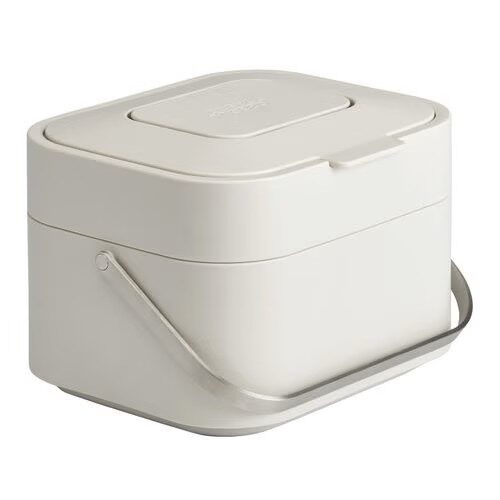 a stainless steel handle for easy carrying
- a secure lid with odour filter
- an adjustable ring that keeps bin liners neatly in place
- custom-fit liners available for a perfect fit
A few food waste caddy hacks
Once you’ve found your ideal food waste bin, keep it odour-, stain- and fruit-fly-free with these handy hacks:
- Freeze first: if a leftover is particularly strong-smelling or runny, put it in the freezer until collection day, then pop it into your food bin last minute.
- Set up a drink station: a separate small caddy next to your kettle or coffee machine keeps tea bags and coffee grounds from dripping across the kitchen.
- Play it cool: keep your food bin out of direct sunlight and avoid putting warm food inside—heat will create condensation and attract pesky fruit flies.
- Go ceramic: a stylish crock pot can double as a food waste caddy that looks great on the kitchen worktop—just make sure it seals properly to keep smells inside.
- Empty regularly: even the best caddies work better if they’re emptied often. And if the waste is especially pungent (leftover fish, anyone?) bypass the caddy completely and put it straight into your outdoor food bin.
- Don’t forget the dishwasher: most plastic and stainless steel food bins are dishwasher safe, and it’s by far the easiest way to remove lingering smells, stains and mystery stickiness in one go.
Trust the waste and recycling experts (that’s us!)
If you manage waste and recycling collection at home AND at work, you’re going to enjoy our huge selection of waste and recycling products.
Here’s a handy link to that intelligent kitchen caddy again, currently on offer at just £28—and for landlords and managing agents, here’s our full range of food waste solutions.
Got a question about your waste collection at work or at home? We love talking “rubbish” so please get in touch!
Call free on 0800 524 4223 or email us at customercare@manutan.co.uk.