
Most sites already own the right safety kit. The gloves are on the shelf, the knives are correct, and the regulations are written up. Yet the gloves go unworn because they are not touchscreen compatible, and a saving of a pound per pair can turn into a four and a half grand cut. The gap is rarely the product. It’s the education, the process and the buy-in around it.

Discover key takeaways from the latest episode of our new podcast: Insights For A Better Workplace
Prefer to listen to the conversation? Stream now
Harry Dalton, Sales Director at Dalton Safety Ltd, has spent 11 years taking the business from a single ceramic blade product to head to toe PPE. In conversation with host Rachel Green, he makes the case for selling education and process change ahead of products, and explains why getting everyone from the shop floor to the boardroom to agree is the hardest part of the job.
The discussion also moves beyond equipment into delegation, growing apprentices, journaling and why mental health belongs inside the remit of health and safety. The thread running through it all is simple: understand the people and the processes first, and the right kit follows.
From Slice UK to head-to-toe PPE
Dalton Safety began life as Slice UK, which predominantly sold Slice ceramic blades. The Slice products were founded by an American company, started by TJ Simone, a friend of Harry’s father, who introduced him to the products when there was no UK distribution. For roughly two years his father ran it as a side hustle alongside an IT background, before asking Harry to take on and push the business around 11 years ago.
In the early days there was no CRM and no proper database. Dalton describes it as starting from complete scratch, which gave him the chance to watch the business grow from nothing to a supplier of head-to-toe PPE and safety equipment. Much of what the company supplies is exclusive to it, and it works closely with distribution partners rather than selling straight out of a catalogue.
Why safety is about education, not selling
Selling a safer £25 knife to replace a £5 Stanley knife only works if the buyer understands why. For Dalton, education is the lever, and once that buy-in lands with health and safety and operations teams, everything else becomes easier. Because partners cannot know every one of the thousands of products they sell, Dalton Safety takes the education and training workload off them, visiting customers on their behalf, producing training videos and building presentations.
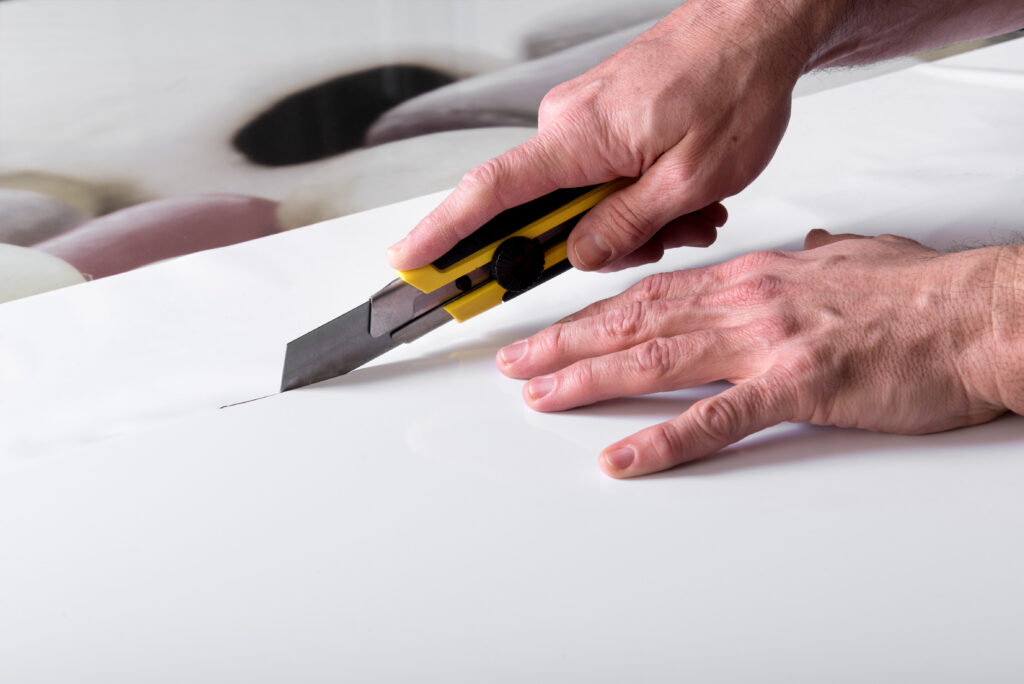
The starting point is always a question about intent, rather than a product code. When a customer asks for a specific item, the first question should be what they are trying to achieve with it, because nine times out of ten they don’t know exactly what they need. That distinction between want and need is where he sees the business and the team adding value.
Actually understanding what it is a customer needs, not what a customer wants. That’s the difference.
People resist change, and the statistics catch up
Dalton notes that the biggest obstacle is human nature, not age. People who’ve used something for a long time do not want to change, and the common objection is that an accident has never happened to them. The conversation touches on how statistics suggest one day it might, whether at work or at home.
His answer is to cover as many risks as possible, not just for one individual but for everyone around them. That means going onto the shop floor to understand where the real hazards are, rather than relying on a presentation. As he puts it, risk does not happen on paper, it happens in the real world.
The unworn gloves and the cost of a cut
Many sites run everything by the book, with regular meetings and PPE checks, yet the recurring issue is kit that is present but unused. A warehouse may have the correct knives and gloves, but the gloves sit unworn. Dalton’s assessments flag this and ask why—and the answer is often that cheaper gloves are not touchscreen compatible, so workers remove them and forget to put them back on.
That small compromise carries a large cost. An extra £1 per glove feels expensive when scaled across a thousand pairs, but it has to be weighed against the much larger expense of an injury, including fees and lost working time. Seeing that bigger picture is the education piece in action.
Practical takeaways:
- Check whether existing PPE is actually being worn, not just whether it is on site
- Specify PPE that fits the real task, such as touchscreen compatible gloves, to remove reasons to take it off
- Weigh a small per-unit cost against the far larger cost of a single cut or injury
Buy-in from top to bottom and bottom to top
Lasting change needs agreement across the whole chain. The employees doing the job have to buy in, as do the health and safety and operations managers, and so do the directors. Directors see the money; health and safety staff manage the people; and the employees carry out the work. If one link is out of place, the change stalls.
Dalton notes that the health and safety manager’s role is one of the hardest in any business, because they manage not only what is used but every employee using it, alongside the reporting that goes with it. The aim is to lift that load rather than add to it.
The buy-in has to be from top to bottom and bottom to top.
The full service: assessments, reports and training
The service is designed as a package rather than a product. When a company wants safer knives, usually to reduce cuts and lacerations, Dalton Safety runs a free assessment and writes a report with recommendations. Crucially, the first consideration is the process, not the knife. If a box only needs two flaps cut rather than four, the fix might be a process change that speeds up work and reduces risk without any new product at all.
After the report come trials and samples, followed by implementation support. If a customer wants them, the team goes on site to produce training videos, often working trainer to trainer with the head team members so they can anticipate and answer the questions their own staff will ask. The goal is a long-term relationship, not a single sale.

Learning to delegate and grow the team
Running the business alongside three children has made delegation essential. Dalton’s strongest advice to anyone leading a team is to learn to delegate, because you cannot do everything, and trying to will only stress you out. Trusting the team to take on responsibility also lets them grow.
That growth is visible in the apprentices. Archie, 18, has developed significantly over his first year, handling lead generation, quoting and early customer contact before passing work to the northern or southern reps, with Tyler and Connor developing in a similar way. Everyone gets involved in a bit of everything rather than being boxed into a single role, which gives younger people a foot in the door and a chance to see which parts of the business they enjoy. Dalton has also recently introduced performance reviews, asking the team where they see themselves in twelve months.
Practical takeaways:
- Delegate and trust the team rather than trying to control every detail
- Give younger staff exposure across the whole business so they can find their strengths
- Use performance reviews to ask people where they want to be in a year
Building a journaling habit
Dalton has journaled for two years and recommends it to anyone balancing a busy workload. The journal starts with goals for the next six months, personal or business, then sets a weekly focus and three top priorities each day. The point is to separate what has to be done from what could be done, and to track habits such as getting to the gym.
The wider benefit is being able to shut his brain off from work. He acknowledges that keeping work and home apart is challenging, noting that he still sometimes reads emails during his son’s football. He is also honest that making time is the barrier most people cite, and his response is that five or ten minutes, morning and evening, is enough to reflect and prepare.
Why mental health sits under safety
For Dalton, mental health belongs within the remit of health and safety, because someone who is not in the right frame of mind cannot do their job safely. The telltale signs are often simple: an employee who’s never late, suddenly late three times in a week. The question is whether anyone is asking them, with warmth rather than blame.
Much of this comes down to knowing people. In a large warehouse, where managers each look after twenty or more staff, he asks how much they actually know about those individuals. When someone feels comfortable, they open up, and that means setting job titles aside and treating everyone as human. He also notes the pressure of targets and peak season, where fatigue builds across a shift and accumulates. Working parents, he observes, can find it hardest of all when a child is ill.
Forget job titles, everyone’s human
The consistent message is to lead with understanding. Most of the equipment debates only matter once the people and processes behind them are properly understood, and the same applies to wellbeing, where knowing your team is worth more than any policy on paper. Dalton’s closing advice is to keep an open mind when it comes to safety, and to use everyone’s skill set rather than confining people to a narrow job description.
Manutan supplies safety products alongside storage, handling equipment and office furniture, supporting organisations on both large-scale kit outs and everyday spend. You can follow Harry Dalton on LinkedIn and learn more about Dalton Safety Ltd at daltonsafety.com.
Tune in to our podcast!
Insights For A Better Workplace is a podcast dedicated to exploring the evolving landscape of the modern work environment.